
Japan Launches MMX Mission to Explore Mars’s Moons
Japan’s MMX spacecraft launched aboard an H3 rocket on October 19, 2026. The mission aims to study Mars’s moons and return samples from Phobos to Earth.
The story in plain English
Japan’s MMX spacecraft launched aboard an H3 rocket on October 19, 2026. The mission aims to study Mars’s moons and return samples from Phobos to Earth.
Launch confirmed: Japan’s Martian Moons eXploration (MMX) spacecraft lifted off aboard an H3 rocket from Tanegashima Space Center on Tuesday, October 20, 2026 at 4:41 a.m. Japan Standard Time, which is Monday, October 19 at 2:41 p.m. Central Daylight Time in Texas. Japan’s science ministry confirmed that H3 Flight No. 10 successfully placed MMX into its intended trajectory. That is a verified launch outcome, not confirmation of future Mars arrival or sampling. See Japan’s official government statement (Japanese) and the German Aerospace Center’s October 19 report.
A robotic mission to two small moons
MMX is designed to travel to Mars, investigate Phobos and Deimos, and bring material from Phobos back to Earth. The returned samples could help scientists evaluate competing ideas about how Mars acquired its moons, including capture of asteroid-like bodies and debris from an ancient impact.
Researchers hope that combining close-up observations, surface measurements, and laboratory study of returned material will reveal more about the history of the Mars system. The mission’s sample return has not yet happened, and any conclusion about the moons’ origin will depend on future evidence.
NASA’s contributions
NASA is providing scientific and technical contributions to the JAXA-led mission. These include the Mars-moon Exploration with Gamma Ray and Neutrons instrument, known as MEGANE, developed by Johns Hopkins Applied Physics Laboratory, and a pneumatic sampling mechanism developed by Honeybee Robotics.
NASA’s October 8 media advisory outlined an October 15 briefing about the agency’s contributions. That briefing was separate from launch coverage. The October 19 launch has now been confirmed by Japan’s science ministry and the German Aerospace Center; follow JAXA for subsequent spacecraft operations.
Next milestones
Launch video and archive: JAXA has created an official MMX/H3 launch webcast page. The live launch window has passed; this official JAXA webcast hub is retained for archived broadcast access and source verification. A replay’s availability has not been independently tested. JAXA had scheduled webcast coverage beginning roughly 55 minutes before the liftoff, subject to operational changes. ESA’s October 13 mission briefing confirms the webcast is intended to be available in Japanese and English. Use the StarStation Launch Center for the broader mission calendar. MMX is expected to reach Mars in 2027, with Phobos sample collection planned for 2030 and a return to Earth targeted for 2031. These are goals, not completed milestones.
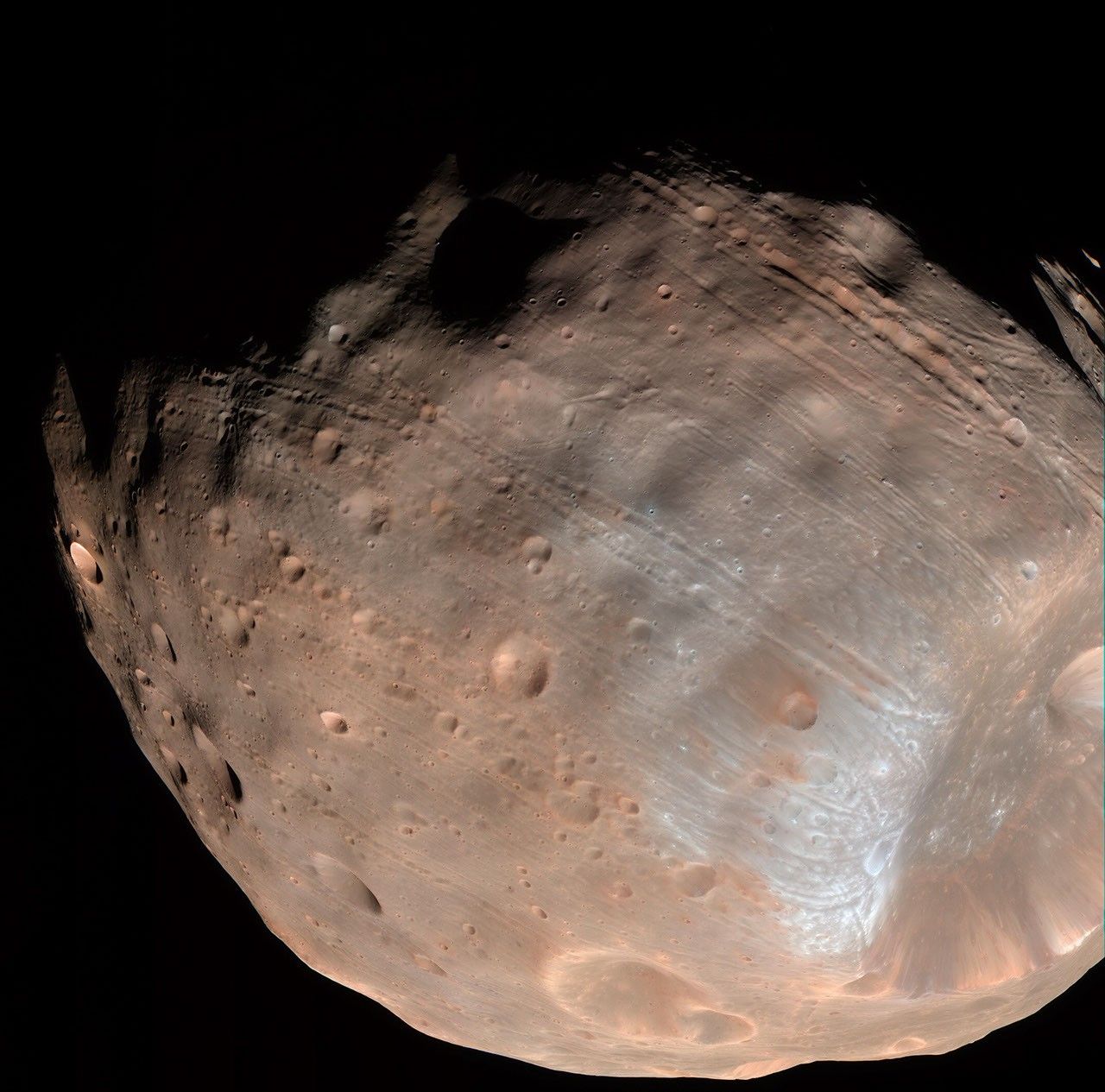
Primary sources: JAXA MMX official mission site; NASA October 8 briefing advisory; NASA MMX science overview. Featured image: NASA Mars Reconnaissance Orbiter HiRISE photo of Phobos, captured March 23, 2008. Credit: NASA/JPL-Caltech/University of Arizona. It shows the real moon Phobos, not the MMX spacecraft. No artist rendering has been used.
Primary source: Japan MEXT / JAXA ↗
Start the conversation