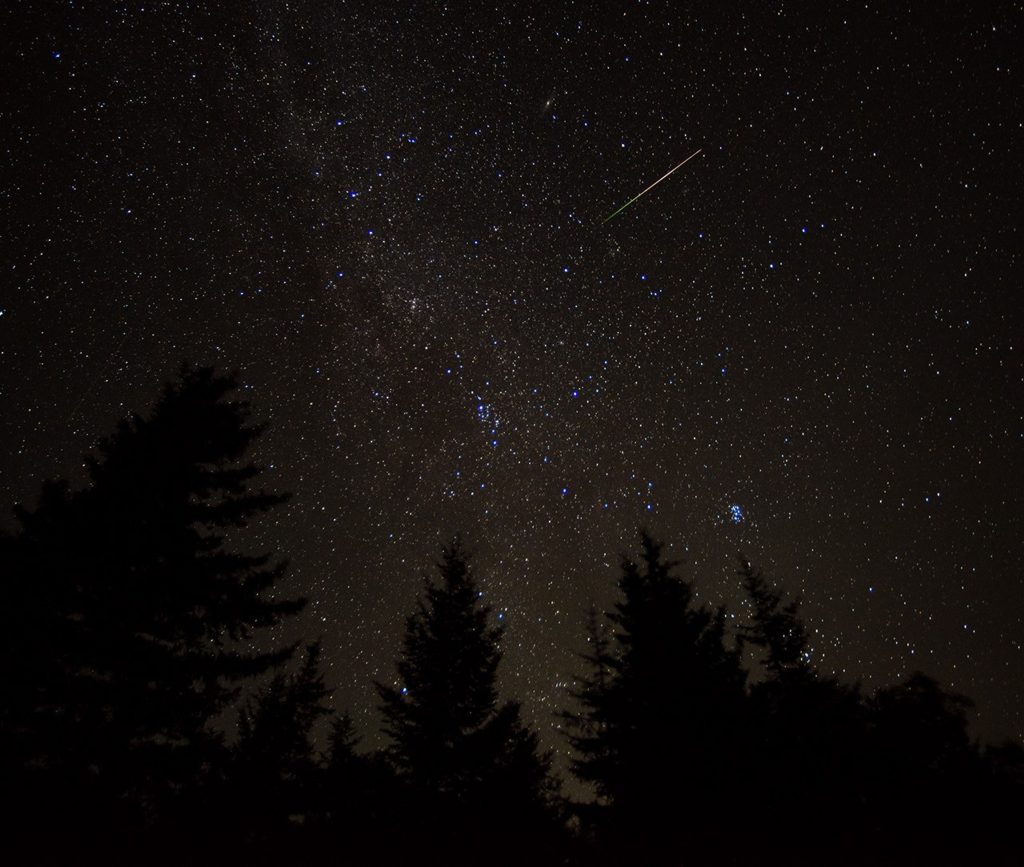
Leonids
Peak: Nov 16–17, 2026
The Leonids are famous for historic meteor storms, but a normal year is much quieter. Fast meteors and occasional persistent trains are the main attraction.
Major meteor showers, peak nights, parent objects, moonlight context, observing advice, and calendar downloads using NASA and American Meteor Society guidance.
Peak night: Nov 16–17, 2026
The Leonids are famous for historic meteor storms, but a normal year is much quieter. Fast meteors and occasional persistent trains are the main attraction.
Peak: Nov 16–17, 2026
The Leonids are famous for historic meteor storms, but a normal year is much quieter. Fast meteors and occasional persistent trains are the main attraction.
Peak: Dec 13–14, 2026
Usually one of the strongest and most reliable annual showers. Current 2026 guidance expects relatively favorable lunar conditions near the peak.
Peak: Jan 3–4, 2027
A major northern-hemisphere shower with a comparatively narrow peak. Timing matters more than it does for showers with broader maxima.
Peak: Apr 22–23, 2027
An established spring shower that can produce occasional bright meteors and trains. Check lunar conditions again as the peak approaches.
Peak: May 5–6, 2027
A fast Halley-comet shower that is especially favorable from the Southern Hemisphere and tropical latitudes, though northern observers can still see activity.
Meteor showers are wide-sky events. A telescope narrows your field too much. The best setup is usually a dark location, a wide view of the sky, patience, and enough time for your eyes to adapt.
Find the darkest safe location you can reasonably reach and avoid direct streetlights or porch lights.
Plan for at least an hour. Meteor activity comes in bursts and quiet stretches.
You do not need to stare directly at the radiant. Meteors can appear across a large portion of the sky.
Moonlight can wash out faint meteors. Clouds, haze, and precipitation can end the session before it starts.
Tonight's Sky combines Sun and Moon timing with observing weather for coordinates you choose. The Observer Logbook can keep your meteor notes afterward.
Peak-night dates and active periods are based on current NASA Science and American Meteor Society guidance. Meteor activity can vary year to year, and predicted rates assume dark skies with the radiant favorably placed.
NASA Meteor Showers ↗