
Observed
0 / 50
0% complete
Learn the Moon as a landscape, not just a phase. Track 50 maria, craters, mountains, valleys, rilles, scarps, and unusual surface features in your own browser.
NASA recommends observing lunar craters and mountains during phases other than full Moon because lower-angle sunlight creates shadows that make relief easier to see. The moving day-night boundary gives familiar features a different appearance from night to night.
NASA Moon viewing tips ↗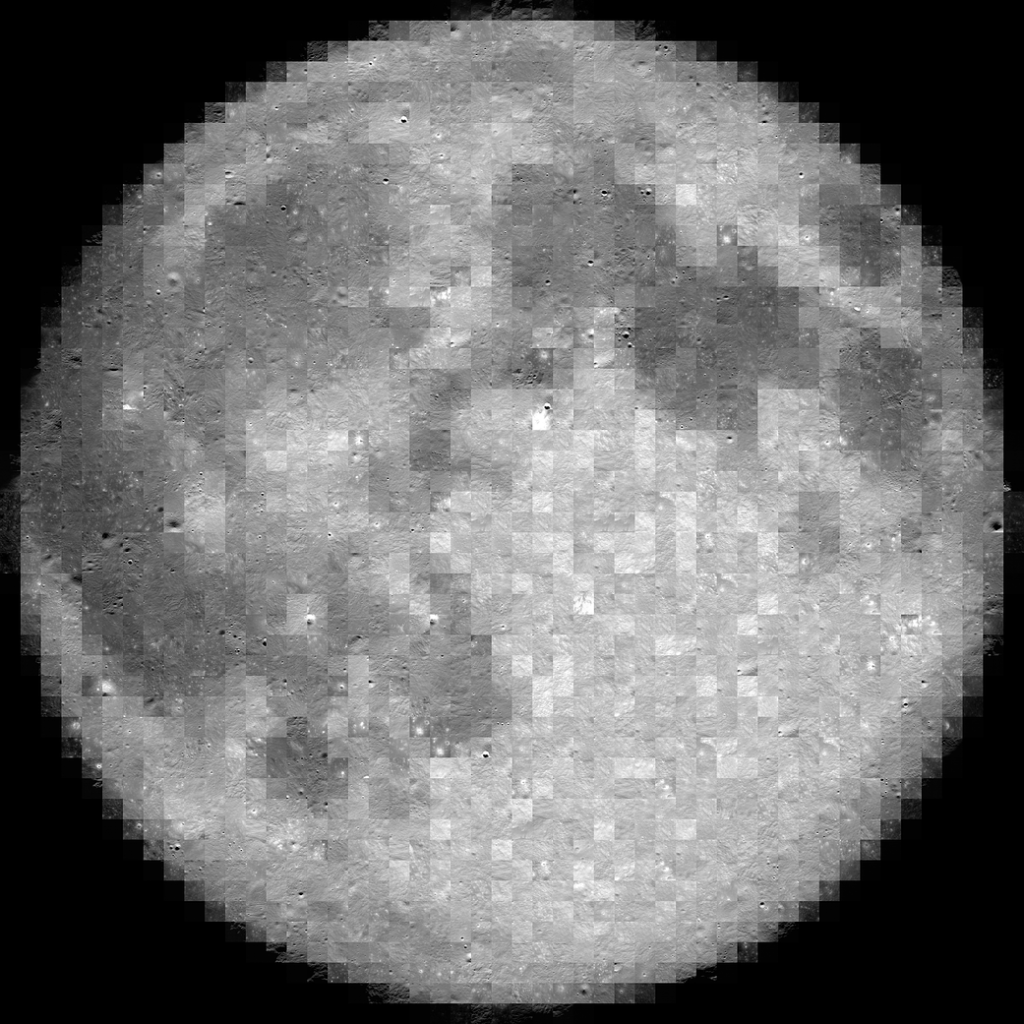
This full-Moon photomosaic is assembled from 1,231 Lunar Reconnaissance Orbiter Narrow Angle Camera images. It is a better reference for a lunar learning challenge than stylized Moon artwork.
Image credit: NASA Scientific Visualization Studio / Lunar Reconnaissance Orbiter.
NASA Moon Mosaic source ↗0% complete
Large-scale landmarks for learning lunar geography.
Impact features ranging from obvious ray craters to smaller telescopic targets.
Mountains, valleys, rilles, scarps, and Reiner Gamma.
Lunar observing rewards repetition. Low Sun angles create long shadows near the terminator. Near full Moon, ray systems and albedo differences can become more conspicuous even while topographic relief looks flatter.
Check phase, illumination, rise, set, and lunar timing before your session.
Make a short lunar target list and put the observing window on your calendar.
Record magnification, conditions, shadows, and details that changed with lunar lighting.
Use NASA’s Daily Moon Guide, Moon Trek, and other official lunar exploration tools.
The Astronomical League has its own Lunar Observing Program with 100 required features and specific certification rules. StarStation’s Lunar 50 is an independent, shorter selection designed to help readers learn common lunar geography and build observing habits. If you want an official certificate or pin, follow the Astronomical League’s current requirements and logs.