
Diameter
3,032 miles
0.38× Earth’s diameter
Compare the eight planets using NASA data for size, average distance, gravity, rotation, and orbital period. For giant planets, gravity is calculated at an atmospheric reference level, not a solid surface. Select a world to compare the details with Earth.
NASA / ESA planetary photography · sizes and distances are not shown to scale · image credits shown with each world
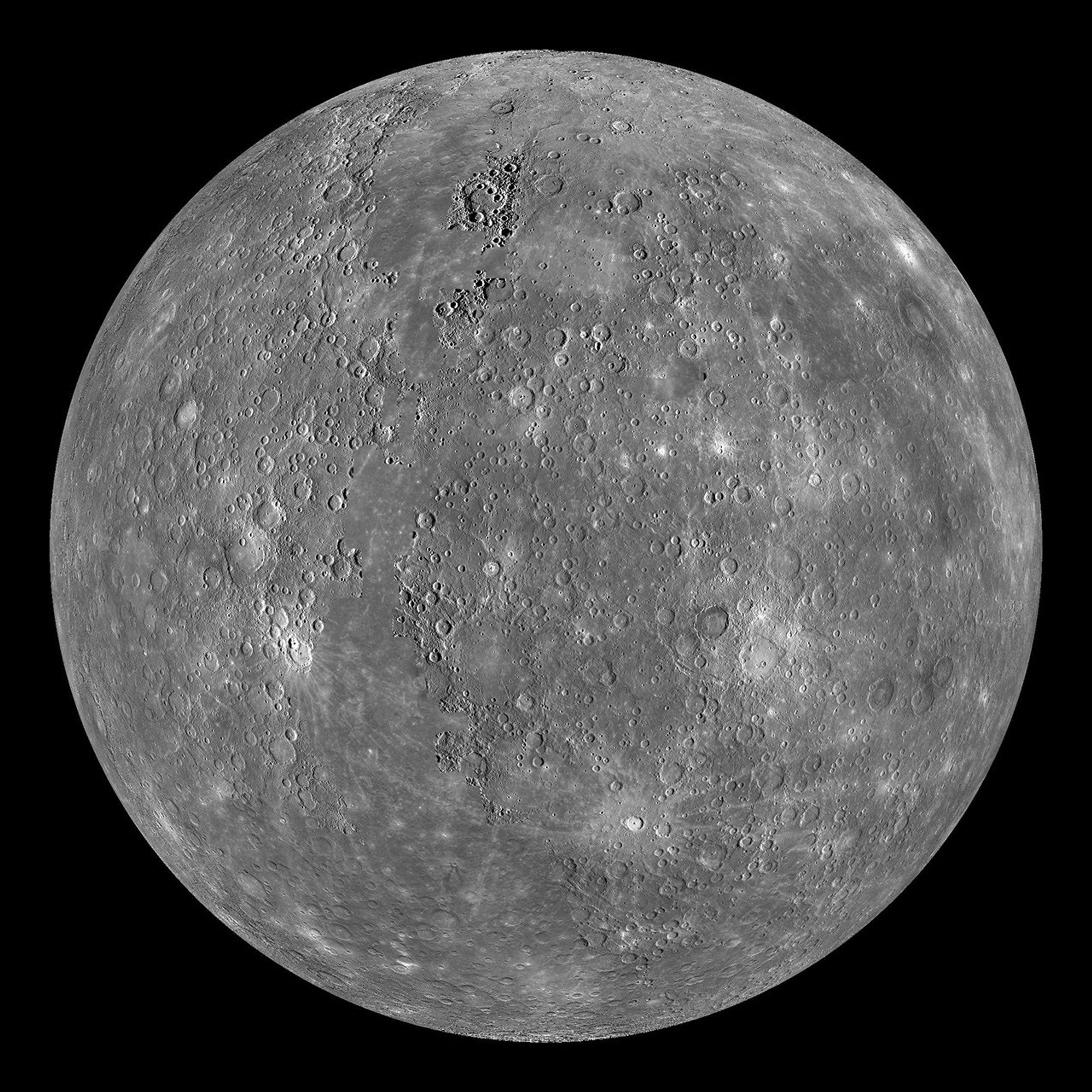
The smallest planet and the closest to the Sun.
0.38× Earth’s diameter
0.39 AU
0.38× Earth gravity
Approximate surface measurement from NASA's planetary facts.
Prograde rotation
0.24 Earth years
Planetary group is descriptive, not a strict visual scale.
Light needs time to cross space, even at its maximum speed of about 186,282 miles per second.
Approximate one-way travel time from the Sun to this planet using its average orbital distance. Actual travel time changes as the planet moves along its orbit.
Source: NIST speed of light ↗The eight planets are not simply different-sized versions of the same world. Their bulk composition, atmospheres, formation histories, and locations divide them into broad planetary families.
Relatively compact worlds dominated by rock and metal, with solid surfaces and much higher average densities than the giant planets.
Enormous planets dominated by hydrogen and helium, with deep atmospheres and no ordinary solid surface where a spacecraft could stand.
Giant planets containing a larger proportion of heavier volatile compounds and interior materials than Jupiter and Saturn, while still possessing deep gaseous envelopes.
If the planet disks were drawn to the same physical scale as the distances between their orbits, the worlds would be tiny and separated by enormous stretches of empty space. Educational diagrams compress distance and enlarge planets so the system can be understood visually.
StarStation uses about 93 million miles as the Earth-distance reference when showing AU comparisons on this page.
Rotation labels here call that out directly instead of displaying a negative period from the underlying fact sheet.
Planetary satellite counts can change as additional moons are discovered or confirmed. This explorer emphasizes more stable planetary measurements instead.
Learn opposition, conjunction, elongation, transit, phase, retrograde motion, and other planetary vocabulary.
Check observing weather, Sun/Moon timing, and current skywatching context.
Follow new discoveries, missions, planetary science, asteroids, comets, and exploration.
Go from StarStation context to primary NASA, JPL, ESA, and mission-source material.
Planet diameters, average solar distances, surface gravity, rotation periods, and orbital periods are based on NASA/NSSDC planetary fact-sheet data. Classification context follows NASA’s Solar System exploration material.